WhatsApp Chat

Connect with us instantly!

Start Chat
Request a Quote
HomeAbout UsOur BlogsContact UsCareersAdmin
logo
Logo
  • Software Development
  • Website Development
  • Digital Marketing
  • google SEO Services
  • Film Production

Menu

  • Home
  • About Us
      • CRM SoftwareCRM Software
      • Mobile ApplicationMobile Application
      • ERP SoftwareERP Software
      • Customized SoftwareCustomized Software
      • PackagesPackages
      • E-CommerceE-Commerce
      • WooCommerceWooCommerce
      • Corporate WebsiteCorporate Website
      • Online PortalOnline Portal
      • PackagesPackages
      • Social Media MarketingSocial Media Marketing
      • YouTube & Meta AdsYouTube & Meta Ads
      • Brand IdentityBrand Identity
      • PackagesPackages
      • Website AuditWebsite Audit
      • Technical SEOTechnical SEO
      • On-Page SEOOn-Page SEO
      • Off-Page SEOOff-Page SEO
      • SEO PackagesSEO Packages
      • Corporate Video PresentationCorporate Video Presentation
      • Explanatory VideoExplanatory Video
      • TV Commercial AdsTV Commercial Ads
      • YouTube AdsYouTube Ads
      • PhotoshootPhotoshoot
      • Model ShootModel Shoot
      • Interview and PodcastInterview and Podcast
      • PackagesPackages
  • Our Blogs
  • Contact
  • Schedule Your Meeting
  • Career
  • Admin

Follow Us

Transform Your Business with CRM

Unlock the power of customer relationships with Jaikvik Technology

What Is CRM?
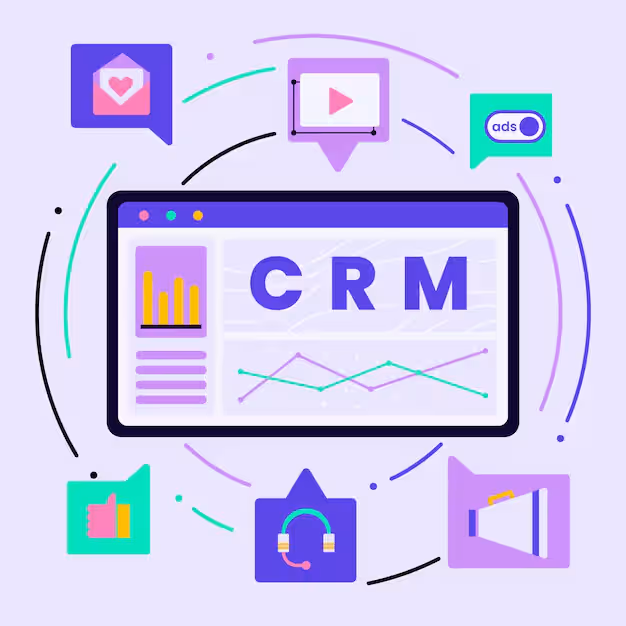
CRM, which stands for Customer Relationship Management, refers to a strategic method of interacting with a company and its present and potential customers. It combines technology, processes, and data to efficiently operate sales, marketing, and consumer care.

CRMs act as a central house for businesses to keep vital information on their customers: contact information, sales history, communication logs, etc. It is not merely a large database but a business operation backbone encouraging staff collaboration, automation of mundane tasks, and the construction of genuine camaraderie with its clientele.

Modern CRMs feature artificial intelligence insights as well as the possibility of integrating more advanced ways for achievement purposes, which help a business significantly forward its capacity to make clear, goal-aligning decisions. In the end, it is a principle of a customer strategy applicable to businesses in all territories, regardless of their size or industry.

CRM illustration showing people and technology
Hand drawn CRM concept with charts and graphs

What Does CRM Do?
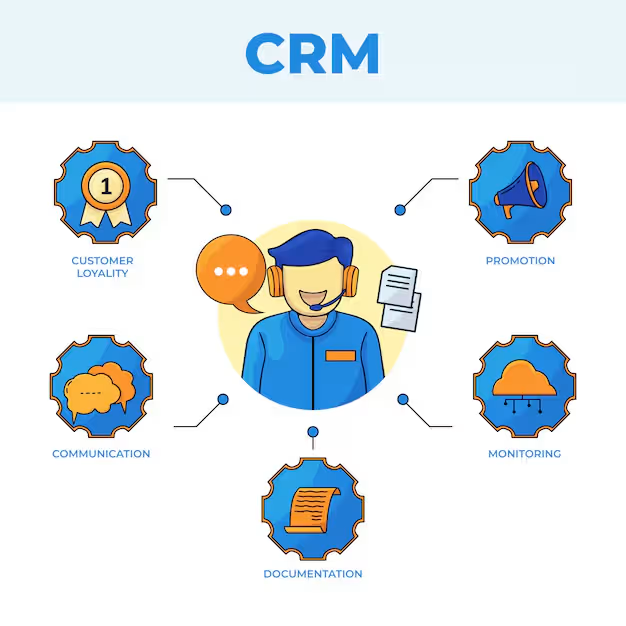
At its core, a CRM is designed to aid businesses in organizing, tracking, and enhancing their interactions with customers. Here is the rundown on its functionality:

Centralizing Customer Data

Every detail concerning a customer is to be managed by the CRM in a single database. This embraces insightful facts such as contact details, sales history, preferences, and communication threads. This in turn guarantees that information does not get lost or overlooked and is instantly available to responsible units.

Administering Sales Pipelines

A CRM system is able to monitor leads along several stages of the sales process. This empowers salespeople to see who is most likely to convert and where efforts should be concentrated.

CRM infographic showing workflow
Gradient CRM illustration with charts

Why Should Enterprises Opt for CRMs?
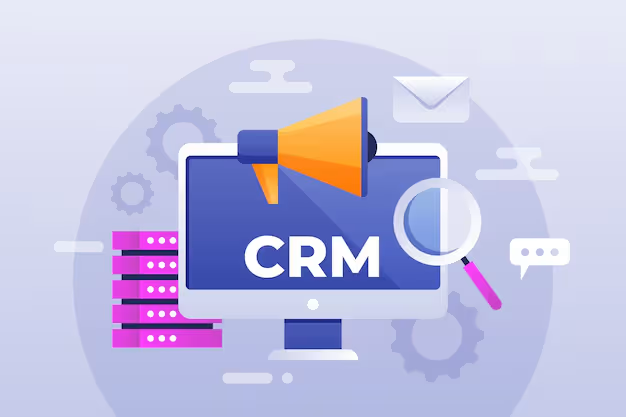
There are so many reasons why CRM systems are essential:

  • Customer-Centric: Vital in creating and sustaining strong customer satisfaction through personalized care.
  • Insight into Data: Harnessing analytical functionalities, a CRM makes it possible to comport data into palatable, relevant understandings that can guide forecasting, measurement, and opportunity identification accurately.
  • Scalability: CRMs are adaptable to businesses of any size, growing with the organization.
  • Increased Efficiency: By allowing hands-free attention to lower priorities during the progress of tasks, CRM brings higher efficiency to the business.
Gradient CRM illustration showing benefits
Hand drawn CRM concept with people

CRM for Different Ventures

The use of CRMs has advanced in many industries today. It allows the provision of tailor-made solutions for meeting specified operational needs. An overview is now presented for how various industries employ CRM for increased efficiency and to better customer relationships:

1. Retail and E-commerce

  • CRMs help retailers to track customer preferences, monitor customer habits of purchase, and produce custom marketing promotions.
  • E-commerce platforms utilize CRM information to serve customer requirements better with custom offers or deal with loyalty programs and cases optimized for convenient shopping.
Gradient CRM infographic showing different industries
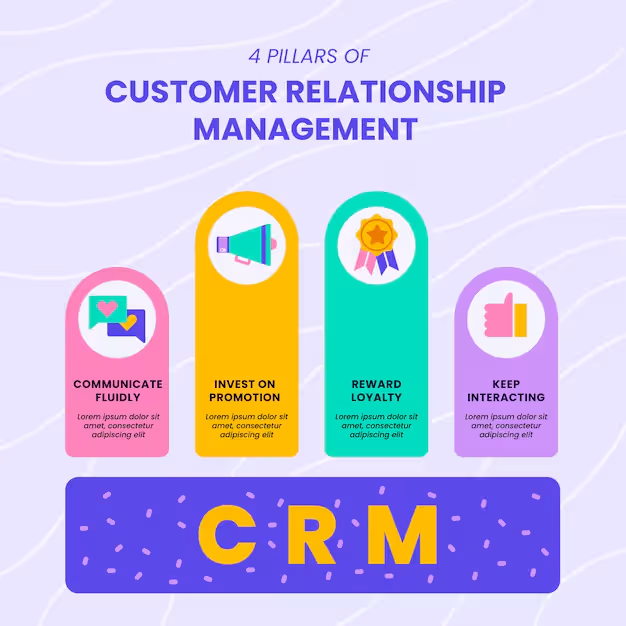
Flat design CRM concept

FAQs About CRM

Define CRM and how it is significant for a Business

CRM stands for Customer Relationship Management. It is a tool used to further manage operations, streamline processes, and increase important customer relationships. It is important for centralizing information, improving customer satisfaction, enhancing team collaboration, and culminating in increased sales and profitability as workflows are automated and useful insights help in decision-making.

Is CRM useful for small businesses?

Yes, small businesses can benefit from using CRM. It's not just for large corporations. CRMs organize customer data, automate tasks, and personalize communication, leading to streamlined efficiencies, time management, and positive customer experiences without spending too much on resources.

What are the primary features to be looked at in a CRM?

Key features include contact and lead management, sales pipeline tracking, marketing automation, reporting and analytics, integration with other tools (email, calendars, etc.), and mobile accessibility. These functionalities increase productivity and decision-making.

How can CRM contribute to customer satisfaction?

CRM provides user data, interaction records, and insight into customer preferences. This allows businesses to deliver personalized services, respond promptly to concerns, and achieve a higher degree of satisfaction and loyalty from the customer.

How difficult is it to implement a CRM?

The implementation of CRM varies case by case depending on the complexity of the system and the size of the business. However, several CRMs offer interfaces that are easy to use and onboarding support for training and tutorials. Working with a CRM implementation team will simplify the process.

Can CRM integrate with other tools and software?

Yes, most modern CRM versions easily integrate with lots of other tools and software, mainly emails, project management, e-commerce storefronts, and accounting software. Such integrations facilitate smooth workflows and harmonized data sync between each of your business systems.

Brochure

Add Your Review

Your Rating

0